
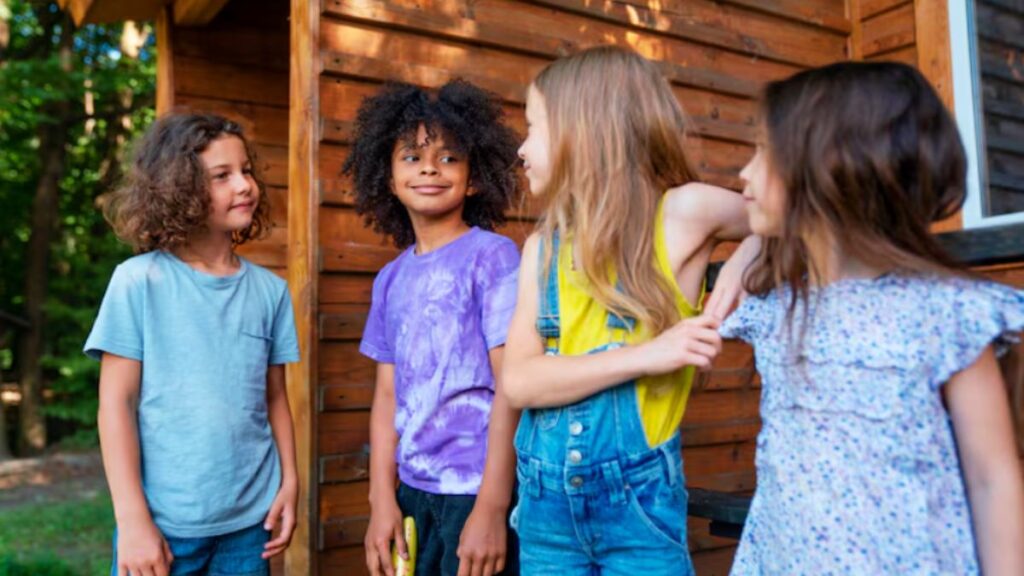
Watching your child step onto a busy playground can feel like watching a nature documentary. You observe from the sidelines, holding your breath as they navigate the complex ecosystem of slides, swings, and sandboxes. Will they join the group building a castle? Will they stand by the fence? Will they snatch a shovel and cause a scene?
Finding the Right Stage for Socializing
You cannot force a flower to grow, but you can provide the right soil. The same applies to social skills. Children need varied environments to practice interacting with peers. Different settings require different behaviors and offer unique learning opportunities.
The Power of Playdates
One-on-one playdates are excellent for children who might feel overwhelmed by large groups. They offer a controlled environment where your child can focus on a single peer interaction.
- Keep it short: For toddlers and preschoolers, an hour or two is usually sufficient. Overtired children struggle with emotional regulation.
- Plan loosely: Have activities available, but don’t over-structure the time. Allow the children to decide how they want to play.
- Pre-game prep: Before the friend arrives, put away special toys your child isn’t ready to share yet. This reduces potential friction before the playdate even begins.
The Great Outdoors: Parks and Playgrounds
The park is the ultimate unscripted social classroom. Here, children encounter peers of different ages and backgrounds. It is a place where “parallel play”—playing beside other children rather than with them—often naturally transitions into cooperative play. The shared goal of waiting for a swing or navigating a climbing structure creates natural, low-pressure moments for interaction.
Structured Group Settings
Daycare centers like those in Taylorsville provide consistent social exposure. In these settings, children learn the rhythm of group dynamics: lining up, taking turns with a teacher’s attention, and following communal rules. The predictability of these environments can be comforting for children who struggle with the chaos of the playground.
Community Events
Local festivals, library story times, or farmers’ markets expose children to the broader community. These events teach “crowd” social skills, such as personal space awareness, using polite words with strangers (like food vendors or librarians), and observing how adults interact socially.
Encouraging Positive Interactions
Simply dropping a child into a social setting doesn’t guarantee they will know what to do. Socializing is a skill set that includes reading cues, communicating needs, and showing empathy. You can coach these skills actively.
Rehearsing at Home
Role-playing is a powerful tool. Use stuffed animals or puppets to act out common scenarios. You might have one puppet ask, “Can I play with you?” and have the other puppet say, “Yes, here is a block.” Alternatively, practice what to do if a peer says “no.” This rehearsal creates a mental script your child can access when they feel nervous in a real situation.
Breaking the Ice
Many young children want to join in but simply don’t know how to start. Teach them specific “entry strategies.”
- Observation: Teach them to watch what the other kids are playing first.
- The “Ask”: Give them a simple phrase, such as “Can I help you build that?” or “I like your truck. Can I play too?”
- The Offering: Sometimes, handing another child a toy is an easier icebreaker than speaking.
Cultivating Empathy
Understanding that other people have feelings is a massive cognitive leap for a toddler or preschooler. You can foster this by people-watching. If a child at the park is crying because they dropped their ice cream, quietly ask your child, “How do you think they are feeling? What would make you feel better if that happened to you?” Validating these emotions helps them learn to respond with kindness rather than confusion or indifference.
Navigating Bumps in the Road
No social journey is without its potholes. Conflict, rejection, and anxiety are all normal parts of the process. How you guide your child through these moments matters more than preventing the moments from happening.
Respecting the “Slow to Warm Up” Child
We often label quiet children as “shy,” but many are simply observers. They prefer to assess a situation before diving in. This is a valid social strategy. Avoid pushing them into the fray immediately. Instead, sit with them on the sidelines. Describe what is happening: “Look, those kids are playing tag. That girl is going down the slide.” Let them detach from you at their own pace. Forcing interaction often increases anxiety.
Conflict Resolution 101
Toddlers are notoriously bad at sharing, mostly because they are still developing the concept of ownership and time. When a tug-of-war breaks out over a shovel:
- Stay calm: Your anxiety will fuel theirs.
- Narrate the problem: “You both want the blue shovel. That is a problem.”
- Offer solutions: “Sam can use it for two minutes, and then it is your turn. I will set a timer.”
- Praise the resolution: “You waited for your turn! That was very patient.”
To Intervene or Not to Intervene?
It is tempting to swoop in the moment a disagreement starts. However, children need space to practice solving problems. Use the “wait and see” approach. If they are bickering but not hurting each other, stand back and observe. They might surprise you by trading toys or moving on to a new game. If the conflict escalates to hitting or hysterical crying, step in firmly to ensure safety, but try to act as a mediator rather than a judge.
Frequently Asked Questions
At what age should I worry if my child isn’t playing with others?
It is completely normal for children under age 3 to engage in “parallel play” (playing near others but not with them). Cooperative play typically begins to emerge between ages 3 and 4. If your child seems completely uninterested in peers or unable to make eye contact by age 4, consult your pediatrician.
How long should a playdate last?
Always end on a high note. For toddlers, 45 minutes to an hour is often enough. Preschoolers can usually handle 90 minutes to two hours. It is better to leave them wanting more than to push until a meltdown occurs.
What if my child is the “aggressor” on the playground?
It can be embarrassing if your child pushes or hits, but it is rarely malicious at a young age. It is usually an impulse control issue or a lack of language. Remove them from the situation immediately to calm down, explain briefly that “hitting hurts,” and help them make amends once they are calm.
Conclusion
Building social skills takes time. Some days your child will share happily; other days, they may shy away. Both are part of learning. By offering varied social opportunities, coaching connections, and guiding them through conflicts with empathy, you equip them to navigate the world. Each park visit, playdate, and wave to a neighbor is a step toward their social growth.