In Cornelius, NC, bathrooms can hold moisture long after a shower ends, particularly when ventilation is limited or surfaces do not dry completely. A small leak may begin behind a tiled wall, around a fixture, or below the shower base, where it is easy to miss until staining or material damage appears elsewhere.
A careful visual check can help homeowners notice concerns early. Resources on shower leak detection and prevention can provide useful information for understanding the kinds of shower conditions that may need closer attention. The most important step is to look beyond the surface and respond when a change keeps returning.
Why Shower Water Damage Can Stay Hidden
Showers contain several transitions where water can find a route beyond the finished surface. Corners, tile joints, plumbing trim, shower thresholds, drains, and wall penetrations all experience regular exposure to water. Even if the tile looks clean and intact, the materials behind it may be damp.
In an upstairs bathroom, for example, the first obvious clue may be a faint yellow or brown mark on the ceiling below. In other homes, moisture may show up as bubbling paint on the opposite side of the shower wall, swollen baseboards near the bathroom, or flooring that begins to warp along an edge.
When comparing repair options or planning a tile-related project, homeowners may also review local tile companies to better understand how tile, grout, waterproofing, and drainage work together as part of a shower system.
Early Signs to Check Inside the Shower
Routine cleaning creates a good opportunity to look closely at the shower itself. Pay attention to changes that occur repeatedly, especially if they worsen after regular use.
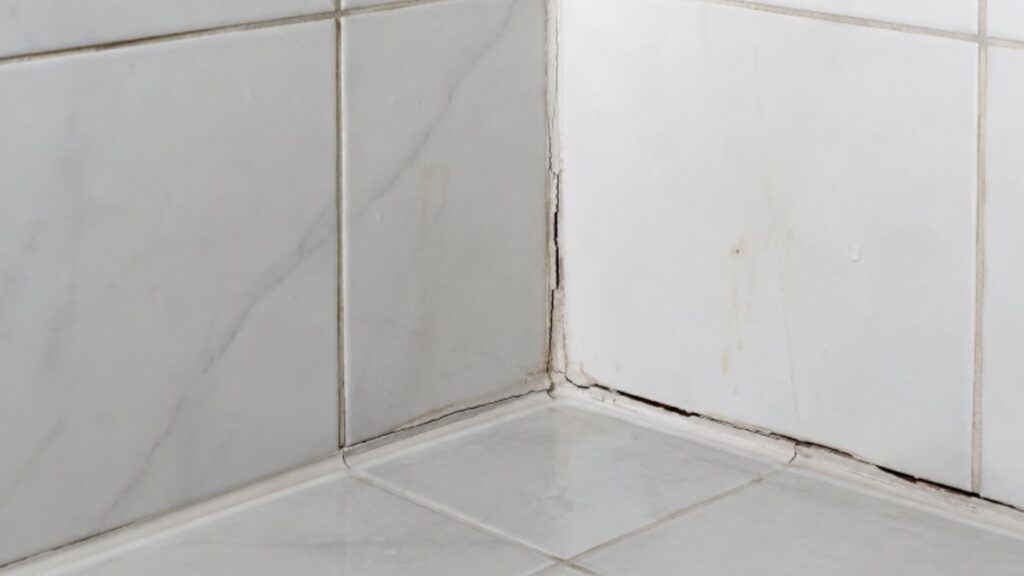
- Cracked or crumbling grout: A small crack can occur from normal movement, but widespread cracking or cracks that return after repair may indicate movement or moisture affecting the area behind the tile.
- Separated caulk: Check inside corners, where walls meet the shower base, around glass tracks, and around plumbing trim. Gaps can allow water to reach areas not meant to get wet.
- Loose or hollow-sounding tile: Tile that shifts, pulls away, or sounds noticeably different from surrounding tile may need evaluation.
- Recurring discoloration: Darkened grout, yellowing, or spots that quickly return after cleaning can signal that moisture is remaining in the area.
- Standing water: Water that lingers on the shower floor, especially near a threshold or wall, may point to a drainage or slope issue.
Warning Signs Outside the Shower
A shower leak can become visible outside the shower enclosure before its source is obvious. Look along nearby walls, trim, floors, closets, and ceilings below the bathroom for peeling paint, bubbling drywall, soft baseboards, warped materials, or stains that become darker after shower use.
A musty odor that returns after cleaning and drying also deserves attention. The key to mold control is moisture control, according to U.S. Environmental Protection Agency guidance, which also advises drying water-damaged areas promptly and fixing the water problem.
A Simple Home Check for Possible Shower Leaks
A basic check can reveal clues without removing tile or opening walls. It cannot confirm every hidden source, but it can help determine whether the problem seems tied to shower use.
- Dry the shower walls, floor, glass, threshold, and nearby bathroom surfaces.
- Use bright light to inspect grout lines, caulk joints, fixture openings, and the shower floor.
- Press gently on suspicious drywall, trim, or baseboards to check for unusual softness. Do not force or puncture the material.
- Look at the wall behind the shower and inspect the ceiling below if the bathroom is on an upper level.
- Run the shower briefly while another person watches nearby surfaces for drips, spreading stains, or moisture.
- Stop immediately if water reaches an outlet, light fixture, or electrical equipment.
Avoid removing tile, cutting drywall, or testing electrical areas without appropriate training. Those steps can create additional damage and may expose hidden moisture or mold.
Common Sources of Hidden Shower Moisture
- Worn or missing caulk at corners and changes in direction.
- Cracked grout or damaged tile joints.
- Loose plumbing trim around a shower valve, showerhead, or body sprays.
- Drain connections that allow water to escape below the shower floor.
- Improper floor slope that leaves water in one portion of the shower.
- Waterproofing problems behind a tiled wall or beneath a shower floor.
- Insufficient airflow allows condensation and damp surfaces to persist.
How Ventilation Helps Control Bathroom Moisture
Use the bathroom exhaust fan during a shower and continue running it afterward so humid air has time to leave the room. Opening a window can also help when conditions allow. Wiping excess water from walls, corners, and glass reduces the amount of moisture left behind on finished surfaces.
Persistent condensation on walls, windows, or fixtures can indicate that the bathroom is not drying effectively. The CDC advises using bathroom exhaust fans that vent outdoors and fixing leaks in plumbing, walls, or roofs so mold does not have moisture to grow.
What to Do When a Warning Sign Appears
- Limit shower use: Reduce water exposure if moisture is appearing beyond the intended shower area.
- Document the change: Take dated photos of cracks, stains, loose tile, and affected trim.
- Dry visible surfaces: Use towels and ventilation to reduce remaining surface moisture.
- Check for spread: Inspect adjacent walls, floors, closets, and rooms below the bathroom.
- Arrange an appropriate evaluation: A plumbing, waterproofing, tile, or water-damage professional may be needed, depending on the suspected source.
When a Professional Inspection Makes Sense
Consider an inspection when a stain or crack keeps returning after a surface repair, tile moves or pulls away, water appears in another room, or a musty odor persists despite cleaning and drying. Prompt evaluation is particularly important if there is damage near wiring, outlets, lighting, or structural materials.
Frequently Asked Questions
Can a shower leak without water on the bathroom floor?
Yes. Water can travel behind tile, through wall cavities, or beneath the shower floor before it becomes visible in the bathroom.
Does cracked grout always mean there is a leak?
No. One small crack does not automatically prove a leak. Repeated cracking, widespread grout damage, or cracking paired with stains and soft materials deserves closer investigation.
Can new caulk solve a shower leak?
New caulk may help if a surface joint has separated. It will not correct a plumbing leak, damaged drain connection, failed waterproofing layer, or wet material behind tile.
Conclusion
Hidden shower water damage often begins with a subtle change rather than a major flood. Checking grout, caulk, tile, nearby walls, and ceilings on a regular basis can help Cornelius homeowners catch moisture concerns sooner. When a sign keeps returning or begins to spread, identifying and correcting the source is more effective than simply covering the surface.