Introduction
Boulder, Colorado, has become increasingly focused on pedestrian safety as accidents involving vehicles and pedestrians continue to pose a challenge to the community. Even with expanded infrastructure and awareness efforts, pedestrian-involved crashes occur too frequently, leading to severe injuries and fatalities. Addressing these incidents requires a deeper understanding of the human factors at play—especially the negligent actions of drivers.
Legal remedies exist for those who are injured due to a driver’s missteps, and consulting a knowledgeable pedestrian injury lawyer in Boulder can be crucial for victims and their families. In this article, we’ll explore the leading causes, critical statistics, hotspots, and both community and legal strategies for turning the tide on pedestrian injuries in Boulder.
The problem extends beyond occasional mistakes and reflects a need for persistent education and accountability. Studies by organizations such as the Governors Highway Safety Association show that pedestrian fatalities are rising nationwide, making local efforts all the more urgent. Strengthening Boulder’s approach can serve as a model for cities across Colorado and the United States.
When Boulder’s drivers neglect safe driving practices, the results can be devastating—especially for those on foot. Comprehensive prevention efforts focus not only on enforcing traffic laws but also on public education and safer street design. A combination of law enforcement, public policy, and community advocacy supports these coordinated approaches.
Common Forms of Driver Negligence
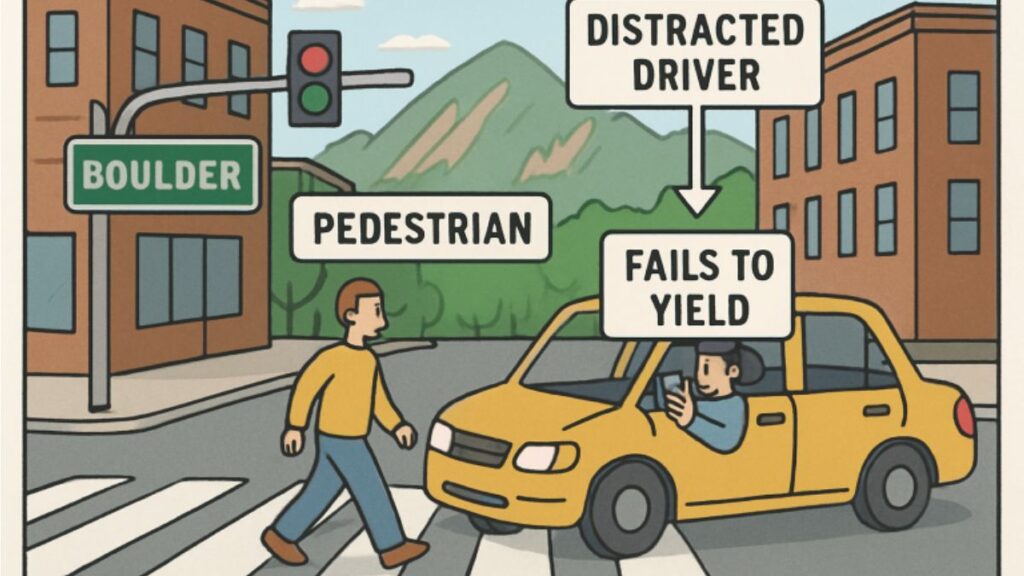
Negligence takes several forms behind the wheel. Among the most dangerous, distracted driving stands out: from texting to adjusting music or navigation, even minor diversions can delay a driver’s reaction and result in missed crosswalks or red lights. Likewise, speeding remains a persistent problem in Boulder, despite ongoing law enforcement crackdowns, which dramatically increase both the likelihood and potential severity of any collision involving a pedestrian.
- Distracted Driving: Even a moment of inattention—such as using a cell phone—can be catastrophic, especially in dense or mixed-use areas.
- Speeding: Exceeding posted limits makes it difficult for drivers to stop in time to avoid hitting pedestrians crossing the road.
- Failure to Yield: Many pedestrian injuries occur at crosswalks where drivers are legally obligated to stop but fail to do so.
- Impaired Driving: Driving under the influence of drugs or alcohol greatly reduces a driver’s ability to recognize and respond to hazards.
These dangerous behaviors make roads less predictable and more hazardous, placing all pedestrians—especially children, older adults, and those with disabilities—at higher risk.
Impact of Negligence on Pedestrian Safety
The damage resulting from negligent driving is reflected in stark city statistics. According to Boulder city data, even though pedestrian-involved incidents represent only a small fraction (2%) of all crashes, they account for 18% of crashes that result in severe injury or death. These disproportionate numbers underscore the perilous environment that pedestrians face when drivers fail to exercise caution.
The severity of these accidents means that the physical, emotional, and financial consequences are often long-term for victims and their loved ones. Many survivors face extended recovery or permanent disability, while families may endure lasting grief and economic hardship.
High-Risk Areas in Boulder
Although pedestrian crashes can happen anywhere, Boulder’s arterial streets are particularly hazardous. These roads constitute just 17% of the city’s total street network but account for a staggering 72% of all crashes involving pedestrians. Factors contributing to these dangerous spots include:
- Higher vehicle speeds, reducing reaction time, and increasing collision severity.
- Busy and complex intersections with poor visibility and heavy mixed traffic.
- Higher foot traffic, especially near schools, transit stops, and business districts.
Identifying and targeting these areas is central to the city’s ongoing safety initiatives, as many of the most severe collisions occur where roads and footpaths intersect most intensely. Urban planners and safety advocates are collaborating to prioritize traffic calming and safer crossings in these areas.
Legal Implications for Negligent Drivers
Colorado law is clear: Drivers must operate their vehicles with reasonable care for the safety of others. Those who fail to do so and cause injury to a pedestrian can be held liable for damages, including the cost of medical treatment, loss of earnings, and emotional pain and suffering. In serious cases, drivers may face criminal charges and heightened penalties, particularly under proposed reforms to state law concerning careless driving that results in fatalities.
Victims have the right to pursue civil claims against negligent drivers, and gathering timely evidence—such as police reports, witness statements, and medical records—is vital. Families who suffer the loss of a loved one may also have grounds for wrongful death actions.
Preventive Measures and Community Initiatives
Vision Zero and Safe Street Design
Boulder’s Vision Zero Action Plan has set an ambitious goal of eliminating serious traffic accidents by 2030. Central to this effort are investments in safer street design, such as improved lighting, accessible crosswalks, and speed-reducing measures. These changes are accompanied by updated signage and enhanced road markings to increase driver awareness in high-footfall areas.
Education and Law Enforcement
Public awareness campaigns help shift attitudes about distracted and reckless driving, emphasizing the real-world consequences of carelessness. Local law enforcement supports these efforts by targeting high-risk corridors, increasing patrols, and issuing tickets for infractions more frequently. These combined approaches are designed to build a “safety culture” within the community, supporting lasting behavioral change.
Role of Pedestrians in Enhancing Safety
While holding drivers accountable is critical, everyone shares responsibility in improving pedestrian safety. Simple measures such as using designated crosswalks, waiting for traffic signals, staying off devices when walking, and wearing visible or reflective clothing, especially at night or during poor weather conditions, all help prevent tragedies. Children should be taught pedestrian rules early, and vulnerable populations should receive special consideration in safety campaign efforts.
Final Thoughts
Driver negligence remains a leading cause of severe pedestrian injuries in Boulder, but it is not an unsolvable problem. Through determined enforcement, community outreach, and personal responsibility, residents can protect the most vulnerable street users. Continued collaboration among city planners, law enforcement, advocates, and individuals is the path forward for bringing Boulder’s vision of safe streets to life for all.