
Managing business expenses with precision is an increasingly critical requirement for organizations in every industry. As operational speed and global reach grow, companies face significant pressure to keep costs under control and ensure financial accuracy. Fortunately, innovations in expense management are offering robust solutions. Technology is dramatically improving accuracy, minimizing fraud, and streamlining workflows for finance teams worldwide. By embracing these developments, businesses can respond more quickly to challenges and generate greater value from their operations.
The expense management landscape is experiencing rapid change, fueled by advancements in artificial intelligence, mobile platforms, payment system integration, and even blockchain. These new tools allow companies to automate routine tasks, gain real-time insights into spending, and maintain compliance with evolving regulations. The benefits include faster reimbursements, fewer human errors, and tighter expense control, which ultimately contributes to better decision-making and a stronger bottom line.
Technological progress is also leading to greater transparency in the way companies govern their financial data. Automation and mobile-first features empower employees to quickly submit claims, while AI-driven analytics help managers spot irregularities faster than ever before. As these tools evolve, the user experience continues to improve, setting a new standard for organizational efficiency and convenience.
Not only are these advances making it easier for employees and managers to submit and approve expenses, but they are also bolstering the security of sensitive information. With privacy and compliance emerging as primary concerns, sophisticated digital solutions are stepping up to protect critical data from both external threats and internal misuse.
Automation and AI in Expense Management
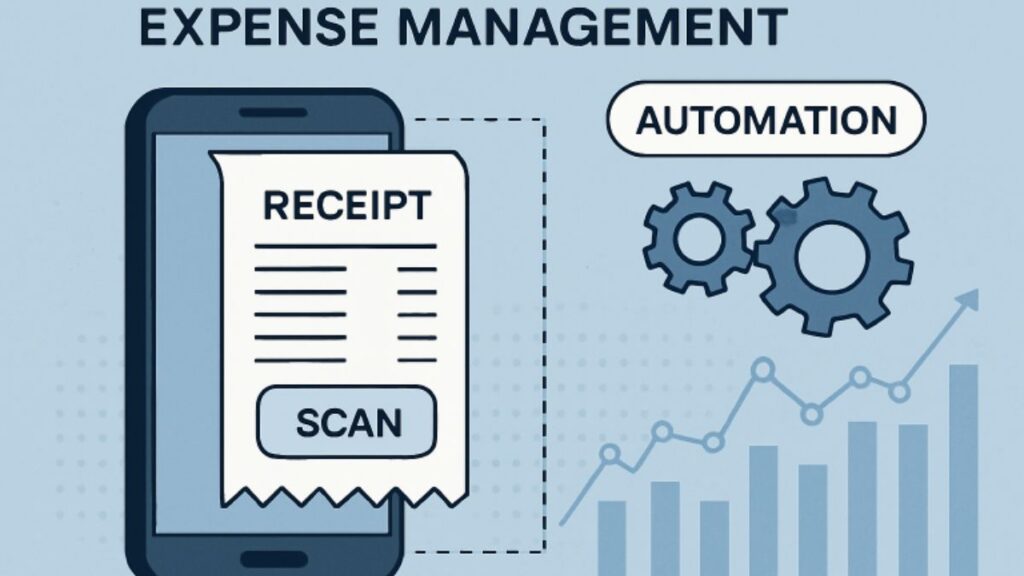
Artificial Intelligence and automation are transforming expense management by replacing time-consuming manual data entry with streamlined digital processes. Through Optical Character Recognition (OCR) and AI-powered parsing, employees only need to snap a photo of a receipt. The system handles extracting the relevant information, such as the date, merchant, and total amount. As a result, finance teams can reallocate effort from administrative chores to value-adding tasks like analysis and forecasting. According to Forbes, the adoption of AI in financial management significantly reduces processing time and human error, ultimately boosting business productivity.
Mobile-First Solutions
Smartphones have become indispensable work tools for today’s on-the-go professionals. Mobile-first expense management platforms allow employees to submit receipts as soon as a transaction occurs. This convenience translates into faster expense approvals and reimbursements, aligning with the expectations of modern, agile workforces. Mobile solutions are essential for remote workers and field teams who require immediate, intuitive access to financial processes directly from their devices. As outlined in research shared by Harvard Business Review, digital tools that prioritize mobile usability are now essential for efficiency in dynamic business settings.
Integration with Payment Systems
Integrating expense management platforms with payment systems such as corporate cards, digital wallets, and payment gateways is fast becoming the industry standard. Seamless integration enables real-time monitoring of company spending, automatic categorization, and simplified reconciliation. Finance teams can set pre-authorization limits and restrict card usage by merchant category, improving control and reducing unnecessary expenses. Embedding these checks and balances into payment systems helps organizations enforce their expense policies without the need for complex manual reviews or delays. Research regularly highlights the operational advantages of synchronizing expense and payment data for transparent oversight. For instance, NetSuite discusses how integrating expense management software with an ERP or accounting system eliminates the need for manual data entry, saving time and reducing errors.
Predictive Analytics and Spend Management
AI-driven predictive analytics tools bring a new level of foresight to corporate spending. By analyzing historical data and identifying trends, these technologies help companies unlock cost-saving opportunities and optimize budget planning. Predictive models can forecast future spending, isolating potential overruns or inefficiencies before they become issues. They also equip managers with actionable insights to proactively adjust strategies and resource allocations based on actual financial data. This shift toward data-driven decision-making represents a powerful transformation in the way organizations govern their budgets and expenses.
Enhanced Fraud Detection
Fraudulent claims represent a persistent risk for any organization. Advances in AI and machine learning are making it easier to detect anomalies by automatically flagging suspicious activity. For instance, algorithms can compare new expense submissions against established benchmarks to identify potential fraud. These systems are adaptive, learning over time to distinguish legitimate variations from genuine red flags. With increasingly sophisticated fraud attempts such as AI-generated fake receipts, advanced detection tools are vital for protecting corporate resources. As described in a comprehensive TechRadar analysis, proactive fraud detection is a critical function in future-ready expense management systems.
Data Privacy and Compliance
Expense management solutions must now navigate an evolving landscape of data privacy regulations, including GDPR and CCPA. Safeguarding personal and financial data is paramount, especially as digital platforms become the preferred gateway for sensitive information. Leading AI-backed systems are designed to ensure compliance by encrypting data, enforcing strict access controls, and rigorously documenting interactions with personally identifiable information. Modern expense management platforms must continually update their protocols to meet emerging requirements and protect against breaches, reflecting the broader importance of digital trust in business operations.
The Role of Blockchain
Blockchain technology is emerging as a powerful tool for boosting transparency and security in expense management processes. Its decentralized framework ensures that expense data cannot be tampered with or deleted, providing a clear audit trail for verification. Blockchain-based records help streamline compliance checks and make it virtually impossible to alter financial data undetected. By providing immutable evidence of transactions, blockchain can play a crucial role in reducing fraud and simplifying the audit process. Research from leading publications highlights the growing impact of both blockchain and AI in transforming financial accounting methods for greater reliability and trust.
Conclusion
Technological innovation is markedly reshaping the world of expense management. AI-driven automation, mobile-first tools, integrated payment systems, predictive analytics, and blockchain are collectively ushering in a new era of efficiency, security, and transparency. Businesses that leverage these advances can manage their finances with greater agility while meeting the highest standards of accuracy and compliance. As these trends continue to evolve, organizations that embrace cutting-edge digital solutions for expense management will gain a distinct advantage in the modern marketplace.