A septic system usually works quietly in the background, making maintenance easy to postpone. Building a routine around septic pumping can help homeowners remove accumulated solids before they interfere with normal wastewater treatment or place extra strain on the drainfield.
The goal is not to pump a tank on a random calendar date. A practical care plan considers the number of people in the home, daily water use, tank size, household habits, and the system’s service history. Watching for changes between appointments also helps identify problems before they become messy emergencies.
Why Septic Pumping Still Matters
A septic tank separates wastewater into layers. Heavier solids settle near the bottom as sludge, while oils and lighter materials form a scum layer at the top. The liquid in the middle flows onward to the drainfield, where soil helps treat it. Pumping removes solids before they build high enough to move toward the outlet or drainfield.
A system can appear normal for years and then develop slow drains throughout the house. A local plumbing clog may cause that small change, but it can also indicate that solids, excessive water, or a drainfield issue is affecting the larger system. Regular observation gives homeowners useful context when service is needed.
For homes that use an on-site wastewater system, residential septic pumping is best viewed as planned maintenance rather than a response reserved for backups. Waiting until wastewater comes up through a drain can allow a manageable issue to become a sanitation and cleanup problem.
How Often Should A Septic Tank Be Pumped?
Three to five years is a common starting range, but it is not a universal rule. The recommended household maintenance schedule from the U.S. Environmental Protection Agency states that tanks are typically pumped every 3 to 5 years and that average systems should be inspected at least every 3 years. Systems with pumps, alarms, floats, or other mechanical parts may need more frequent inspections.
Factors That Can Change The Schedule
- Household size: More residents usually mean more wastewater and faster accumulation of solids.
- Tank capacity: Smaller tanks have less room for sludge and scum.
- Guest frequency: Extended visits can create short periods of unusually heavy use.
- Water volume: Leaks, long showers, and concentrated laundry days send excess water into the system.
- Garbage disposal use: Ground food scraps add solids that can shorten the pumping interval.
- Service history: Past inspection notes provide a better guide than a generic schedule alone.
Seven Signs The System Needs Attention
- Several drains move slowly. A single slow sink may have a nearby clog, but multiple fixtures deserve faster attention.
- Toilets or pipes gurgle. Air movement in plumbing can suggest restricted flow farther down the system.
- Unpleasant odors appear. Sewer-like smells indoors, near the tank, or around the drainfield should not be ignored.
- Water gathers outside. Pooling water near the tank or drainfield may indicate that wastewater is not moving or being absorbed as intended.
- Grass becomes unusually green or spongy. A distinct patch can indicate excess moisture beneath the surface.
- Wastewater backs up indoors. Sewage in sinks, tubs, showers, or toilets is urgent and requires stopping water use.
- An alarm sounds. A system with electrical controls or a pump may have an issue that needs timely diagnosis.
What Happens During A Pumping Visit?
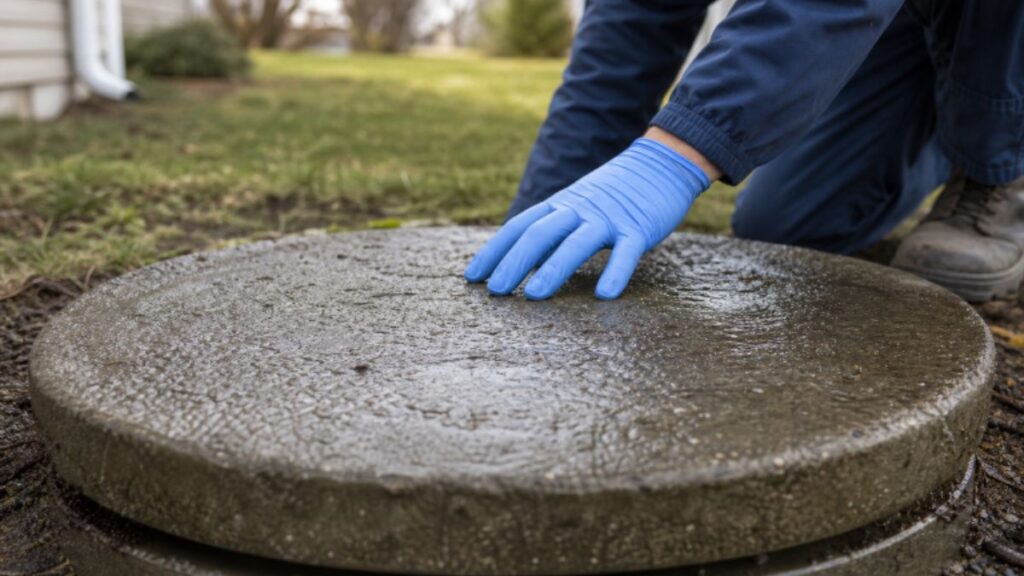
A typical visit involves locating the tank, opening accessible covers, removing the contents, and checking visible components. The service professional may assess the tank’s condition, inspect baffles, review the effluent filter when present, and note the sludge and scum levels. A written record should document work completed and any recommended follow-up.
Homeowners should never enter a septic tank or lean into an open access point. Hazardous gases, low oxygen levels, and unstable covers pose serious risks. Trained professionals with appropriate equipment should handle below-ground inspection and repair work.
How To Prepare For Septic Pumping
- Identify the tank location if it is known.
- Clear vehicles, outdoor furniture, toys, and heavy objects from the access area.
- Keep pets safely indoors or away from the work area.
- Share the last known pumping date and any previous service notes.
- Mention recent slow drains, odors, wet spots, alarms, or backups.
- Request a written service record for future planning.
Accessible lids can make maintenance more efficient and may reduce the need for unnecessary digging. Do not attempt to uncover covers yourself if their location is uncertain or if soil conditions make the area unsafe.
Daily Habits That Reduce Septic Strain
Small household choices affect how much water and solid material enter the tank. Repair running toilets and leaking fixtures quickly. Run full dishwasher loads, choose the correct washing machine load setting, and spread laundry throughout the week instead of doing many loads in one day. This gives the system more time to settle and treat wastewater.
Keep These Items Out Of The System
- Disposable or so-called flushable wipes
- Paper towels, tissues, dental floss, and cat litter
- Fats, oils, grease, coffee grounds, and excess food waste
- Feminine hygiene products and diapers
- Paint, solvents, pesticides, medications, and harsh chemicals
Protecting The Drainfield
The drainfield needs open, uncompacted soil to absorb and treat wastewater. Keep vehicles, sheds, patios, pools, and other heavy structures away from the area. Direct roof runoff, sump-pump discharge, and landscape drainage away as well, since too much outside water can interfere with treatment. Guidance on how water use and solids affect pumping needs also reinforces the importance of routine habits.
What To Do When A Backup Happens
- Stop using toilets, sinks, showers, washing machines, and dishwashers.
- Keep children and pets away from standing wastewater.
- Avoid direct contact with sewage and clean exposed surfaces carefully.
- Do not open the tank or attempt a repair without proper training.
- Arrange a professional diagnosis to determine whether the issue involves plumbing, the tank, a pump, or the drainfield.
Keep Better Septic Records
Store pumping dates, inspection notes, repair receipts, tank size, access locations, and recommended follow-up dates in one paper or digital file. A calendar reminder can prevent years from passing without maintenance. With a realistic schedule, careful water use, and quick attention to warning signs, homeowners can support a healthier septic system throughout 2026 and beyond.